Mo Pai is often discussed as though it were sui generis. It is not. Almost every element of its documented practice has close relatives, and locating those relatives is the fastest way to see what is genuinely distinctive about it.
Neidan — Taoist internal alchemy
The parent tradition, and the one Mo Pai's practice most resembles. Neidan developed from roughly the Tang dynasty into an enormous technical literature (the Zhong-Lü corpus, the Wuzhen pian, the Longmen commentaries) describing the refinement of jing into qi, qi into shen, and shen into emptiness, via dan tien work, the microcosmic and macrocosmic orbits, the kan-li fusion, and the gestation of an immortal embryo culminating in the yang shen.
Every one of those terms appears in Mo Pai. The differences are of emphasis and register: Mo Pai is far more literal about the physicality of stored qi, far more forceful in its methods, far more insistent on external verification, and far more sparing with cosmological apparatus. If you want to understand Mo Pai's theory, the neidan literature is where to go — and it is centuries deeper and better documented than anything Mo Pai has produced.
Wudang and Longmen neigong
Established Taoist monastic and semi-monastic transmissions, with documented histories, living institutions, public teachers, and published curricula. They cover much of the same technical ground with far more supporting structure — ritual, scripture, community, ordination.
The relevant contrast is institutional. These lineages can be visited, their teachers can be named, their histories can be traced. Mo Pai has one filmed practitioner and a set of testimonies. That does not make the monastic traditions correct about qi; it makes them checkable as traditions in a way Mo Pai is not.
Kunlun / Nei Kung (Max Christensen)
A modern Western-taught system that circulated in the same 2000s milieu and drew from overlapping audiences. It is generally more accessible, faster-acting in its claims, and structured for seminar transmission. Practitioners of the two systems have historically been sharply critical of each other. It is a useful comparison mainly for showing how differently a tradition looks when it is designed to be taught to Westerners at scale.
Nei Qi Gong / assorted modern lineages
A broad category of contemporary internal systems, some with genuine transmission and some assembled recently, that make comparable claims about internal energy development with varying degrees of sobriety. The general pattern: those with the most modest claims tend to have the most substantial teaching, and those promising the most tend to deliver the least. Mo Pai is unusual in making enormous claims through a figure who was simultaneously deflationary about himself.
Mainstream qigong and taijiquan
The overwhelming majority of the field, concerned with health, longevity, structure, and movement quality. The relationship is roughly that between recreational running and mountaineering: shared physiology, entirely different risk profile and time commitment. A great deal of qigong has real, measurable, boring benefits — balance, blood pressure, mood, and pain outcomes have all been studied with reasonable results — and nothing in Mo Pai's claims is required to justify practising it.
Indian parallels
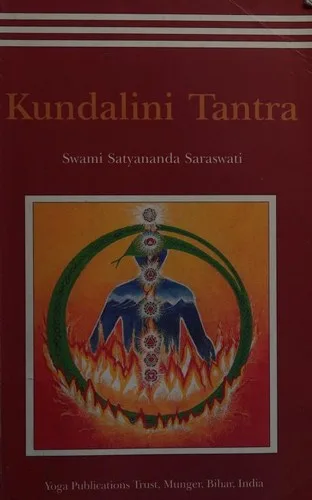
Worth noting because they are structurally so close. Kundalini yoga describes energy raised through spinal centres. Mula bandha is the perineal lock. Pranayama with kumbhaka is breath retention. The siddhis of the Yoga Sutras are a catalogue of powers explicitly warned against as distractions from the goal — which is exactly Mo Pai's stated position on level 4.
When two traditions with limited historical contact independently describe locking the perineum, retaining the breath, concentrating below the navel, raising energy through the spine, and then warning that the resulting powers are a trap, something is being described. What that something is — a real energetic anatomy, or the reliable phenomenology of a particular thing human nervous systems do under those conditions — is the whole question, and neither tradition can settle it from the inside.
| System | Documented history | Public curriculum | Living teachers | Verification |
|---|---|---|---|---|
| Neidan (classical) | Extensive, ~1000 years | Vast published corpus | Various | Lineage-internal |
| Wudang / Longmen | Documented institutions | Substantial | Yes, nameable | Institutional |
| Mainstream qigong | Modern, traceable | Fully public | Abundant | Not applicable |
| Kunlun and similar | Modern, ~decades | Seminar-based | Yes | Self-report |
| Mo Pai | Unverifiable | Levels 1–4 only, leaked | Contested | Teacher's hand, binary |
The single closest relative gets its own article: see Qi Gong, and What It Shares with Mo Pai for what Mo Pai shares with the wider qigong world, structure by structure, and where the two part company.