Everything this archive was built from: the primary sources on Mo Pai itself, the classical alchemical literature its vocabulary was borrowed from, the Mohist canon behind the lineage's name, and the wider qigong texts that put all of it in context.
The primary sources
Everything the world knows about Mo Pai comes from a small number of documents, two of them by the same author. Read these first: the rest of this archive is built on them.
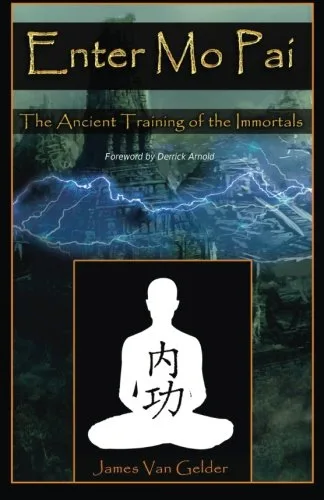
The founding Western text and the reason anyone outside Java has heard of any of this. Danaos's account of training under John Chang is the source for the level structure, the 72-level ladder, the biography, and most…
The technical follow-up. More method, more context on where Mo Pai sits among internal martial traditions, and more of the theory the first book only gestured at.
The book of the television series that contained the four minutes of "Dynamo Jack" footage — still the only visual documentation of the claims made by anyone outside the tradition.
The second Western student’s own account, and the only substantial one that is not Danaos’s. It matters for exactly that reason: where the two men describe the same events, the archive can compare them, and where…
Mo Pai is Taoist in method and attached to no Taoist institution. These are the texts and the scholarship on the tradition its methods came from — the philosophy, the religion, and the difference between them.
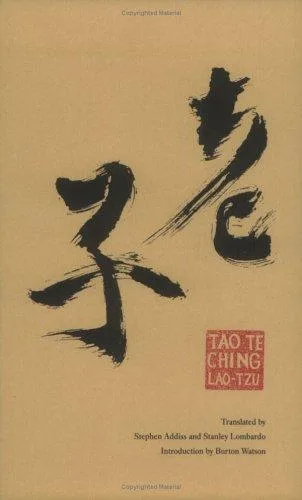
Laozi, translated by D. C. Lau · 1963 · Penguin Classics
The root text, in the translation that stays closest to what the Chinese actually says. Nothing in it describes a practice, a level, or an energy — which is itself the most useful thing a Mo Pai reader can learn from it.
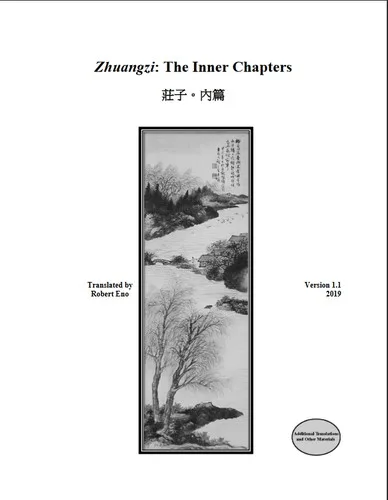
Zhuangzi, translated by Brook Ziporyn · 2020 · Hackett
The other founding text, and far stranger. The source of the zhen ren, the "true person" who breathes with their heels — the first hint in Chinese literature that a realised person breathes differently.
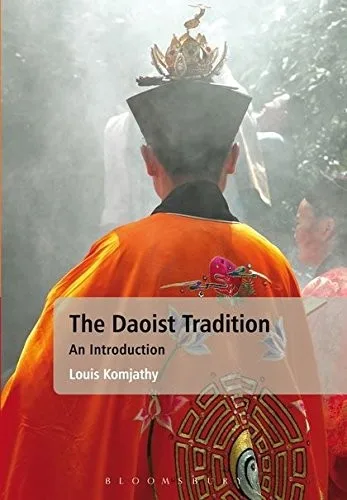
A single-volume survey by a scholar-practitioner: history, schools, ordination, cosmology and practice in one place. The fastest way to see how much apparatus Mo Pai is missing.
Isabelle Robinet · 1997 · Stanford University Press
The history of the organised religion, from the Celestial Masters in 142 CE to the Ming. Rigorous, and the corrective to the idea that Taoism is a philosophy of going with the flow.
Translation and study of the Neiye, c. 4th century BCE — the earliest text describing the cultivation of qi through posture, breath and stillness. Everything on this site descends from the proposition in this small book.
Two volumes, and the reference to check anything against. Entries on neidan, dan tien, jing, qi, shen, yang shen, shi jie and every other term in this archive's glossary.
Mo Pai's technical vocabulary — dan tien, kan-li, the circulations, the immortal embryo, the yang shen — is borrowed almost entirely from Taoist internal alchemy. These are the books that vocabulary comes from.
The old standard English translation of a neidan manual. Read it beside the Mo Pai level descriptions and the borrowing is obvious: the gates, the circulations, the embryo, the spirit body, in the same order.
The best short scholarly introduction to neidan. Pregadio is a historian of religion rather than a practitioner, which is exactly why he is useful here: he describes what the tradition says without needing it to be true.
Kristofer Schipper · 1993 · University of California Press
A scholar who was also an ordained Taoist priest, writing on how the body is conceived in Taoist practice. The best correction to the assumption that qi talk is a clumsy attempt at physics.
The biography of Wang Liping, a modern Longmen inheritor. Structurally the closest thing in print to The Magus of Java — a hidden lineage, a living master, extraordinary claims, one devoted chronicler.
Wang Mu, translated by Fabrizio Pregadio · 2011 · Golden Elixir Press
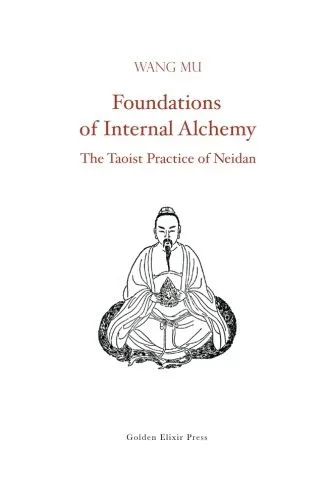
A modern Chinese master's systematic summary of the neidan process, stage by stage. The clearest published statement of the three refinements that Mo Pai's levels enumerate.
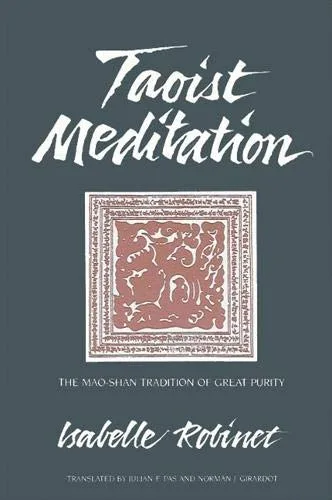
The Shangqing visionary tradition in scholarly detail — the interior practice that fed into internal alchemy, several centuries before anything called neidan existed.
A short neidan classic on circulating the light and gestating the spirit body. Read this translation rather than the famous Wilhelm–Jung one, which worked from a defective text and a psychological reading of it.
The lineage takes its name and its claimed descent from Mo Tzu and the school he founded. These are the Mohists in their own words, and the modern scholarship on them.
Ian Johnston (translator) · 2010 · Columbia University Press
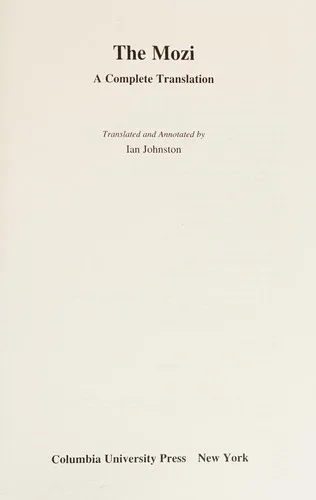
The complete Mohist corpus in English: impartial care, the arguments against fatalism and lavish funerals, the logic canons, and the siege engineering. What the lineage claims descent from, in its own words.
Where Mo Pai sits among the internal arts. These books cover the theory shared across the field, and show which parts of the method are common to every internal school and which are particular to this one.
A clear, cautious, unmystified account of the theory shared by every internal school, including this one. Useful for calibrating which Mo Pai claims are ordinary in the field and which are not.
Tianjun Liu and Kevin W. Chen (editors) · 2010 · Singing Dragon
The closest thing to an institutional textbook, including the clinical research literature and its limits — which is where anyone interested in the "external qi" claims should start.
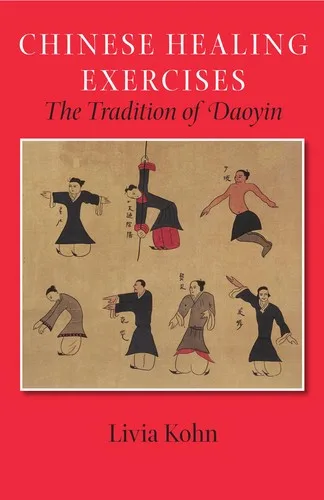
The scholarly history of the practices, from the Mawangdui charts of 168 BCE to the present. The book that shows "qigong" to be a modern label on a very old body of material.
David A. Palmer · 2007 · Columbia University Press
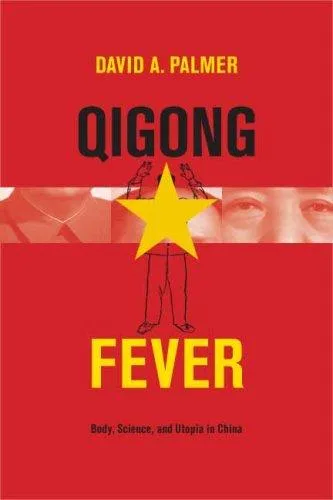
The definitive account of the 1980s–90s boom: the mass movements, the grandmasters, the state-backed research into emitted qi, and the crackdown that ended it. Essential context for the era the Ring of Fire footage…
The best general Western introduction: history, theory and practice, written by someone who takes the tradition seriously without overselling what it can do.
A whole book on filling the lower dan tien — the stage Mo Pai calls level 1 — with the classical sources translated alongside. The single closest published treatment of what the Mo Pai foundation is doing.
The sequel, on the microcosmic orbit: the three gates, the two vessels, and the whole circuit that Mo Pai calls level 2 — including the traditional cautions about forcing it.
Qi, jing and shen are medical terms before they are alchemical ones. These are the books that show how the body was actually modelled — the functional system the mystical reading of qi tends to obscure.
The classic explanation of Chinese medicine to a Western reader, by someone trained in both. The best cure available for reading qi as a mistaken attempt at physics rather than as a functional description of a working…
The standard clinical textbook. Where to look up what the tradition means by yuan qi, wei qi, the five shen, or jing depletion, stated precisely and without mysticism.
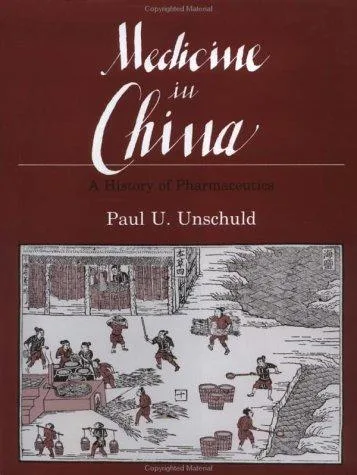
Paul U. Unschuld and Hermann Tessenow · 2011 · University of California Press
The foundational medical classic in a scholarly translation. Its opening chapter sets out the arc of jing across a life in cycles of seven and eight — the oldest statement of what the three treasures article describes.
Paul U. Unschuld · 1985 · University of California Press
How the ideas actually developed, and how much they changed. A useful antidote to the claim — made by Mo Pai and by most traditions — that a body of knowledge came down unaltered for two thousand years.
Mo Pai describes itself as combat nei kung, not a wellness practice. The history of Chinese martial arts is also the history of how internal-power claims are made, transmitted, and attached to prestigious ancestors.
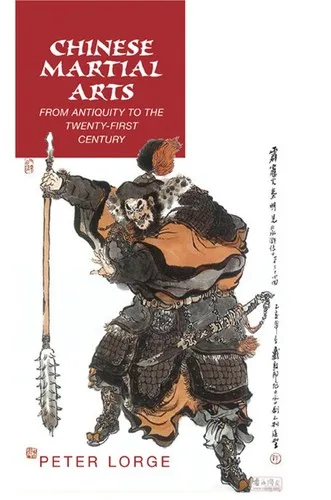
The academic history of the field Mo Pai claims to belong to. Shows how internal-power claims and prestigious founding ancestors have functioned in Chinese martial culture for centuries.
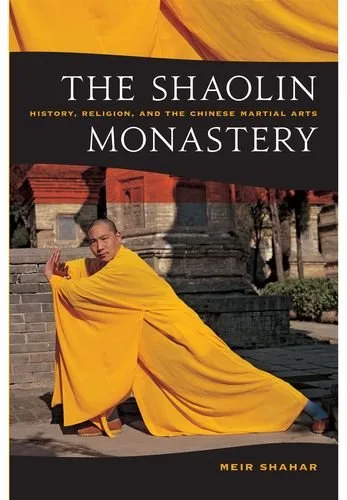
A model of what serious scholarship does to a famous origin story. The Bodhidharma legend does not survive it, and the actual history that replaces it is more interesting than the legend was.
Everything written about Mo Pai after Danaos, by people who were not Chang's students. Several are self-published, several teach or sell a method, and none of them stands in the same relation to the tradition as the primary sources above. They are listed because they exist and people read them — the note under each one says whose account it is.
The fullest book-length treatment of the training after Danaos, by an author whose background is in Western hermetics, Taoist nei gong, Tibetan alchemy and kundalini yoga rather than in the Mo Pai lineage. It covers…
A short book about the prerequisites: what the author holds a person must settle before level one is worth attempting. It discusses the first four levels without giving their practice, and it ends by directing the…
Ikanos Proteos · undated · Self-published (Germany) · German
The one German-language book on the subject, presenting itself as a complete training and reference work that sets classical Taoist principles beside physiology, neuroscience and biomechanics. It follows the 72-stage…
Reads Mo Pai alongside Taoist internal alchemy and tantric physiology, and argues the whole thing is better understood as an early biological technology — nervous system regulation, breath control, polarity, endocrine…
An acupuncturist and palliative care practitioner in the UK going back over the existing record — the Ring of Fire footage and the accounts left by Chang’s two Western students — and setting it against what he knows…
Emily K. Kissoon (also credited as Emily K. Patel) · 2026 · Independently published
The same author's treatment of what the training is said to do to the person doing it, and of the discipline the tradition places around that. Catalogued under both names because the listings differ: the paperback is…
The Indian traditions describe the same locks, the same breath retention, and the same warning that the resulting powers are a trap. And the modern literature on what intensive contemplative practice does — and does not do — to a person.
The classical Indian statement of the path, including the chapter on the siddhis — powers catalogued in detail and then named explicitly as obstacles. Mo Pai's position on level 4, arrived at independently.
Swami Satyananda Saraswati · 1984 · Bihar School of Yoga
Energy raised through spinal centres, the perineal lock (mula bandha), and breath retention with the same warnings attached. Read beside the Mo Pai instructions, the structural overlap is hard to explain away.
The comparative study of the whole complex — breath control, the immortal body, the powers, the transcendent figure. Dated in places, and still the best map of how widely this pattern recurs.
Daniel Goleman and Richard J. Davidson · 2017 · Avery
What the research actually supports, by two people who spent their careers on it and are unusually willing to say which findings did not hold up. The measured effects of long practice are real, and smaller than the…