Something like a hundred million people practise qigong. Perhaps a few thousand have ever seriously attempted Mo Pai. The two look nothing alike from outside — a park full of people moving slowly at dawn, against one man sitting motionless in a dark room for four hours — and they are built out of the same components, arranged for opposite purposes. Setting them side by side is the most efficient way to see what Mo Pai actually is.
The term is younger than the practice
"Qigong" (氣功, "qi work" or "breath work") is a modern coinage as a category name. Isolated occurrences appear in earlier texts, but the word entered general use in 1950s China largely through Liu Guizhen, who used it for the therapeutic breathing and meditation methods he taught at a sanatorium in Tangshan and set out in a 1957 handbook. The choice of a plain, secular, medical-sounding label was not accidental: it allowed practices with deeply religious ancestry to continue inside a state hostile to religion, reframed as health care.
The practices themselves are two and a half thousand years old and had other names, most of which are more informative than the modern one:
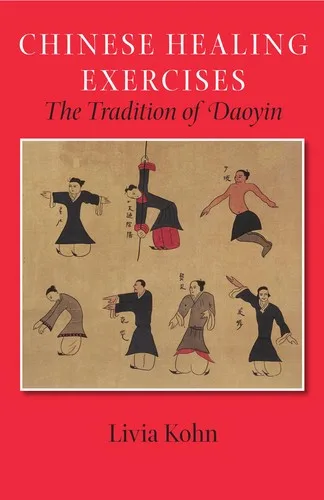
- Daoyin (導引), "guiding and pulling" — the stretching and movement tradition. The Mawangdui tombs, sealed in 168 BCE, yielded an illustrated chart of forty-four such exercises, the oldest surviving depiction of the practice.
- Tuna (吐納), "expelling and taking in" — breath work proper.
- Xingqi (行氣), "circulating qi" — moving it deliberately through the body, attested by the fourth century BCE.
- Zuowang (坐忘), "sitting and forgetting" — the Zhuangzi's term for meditative self-emptying.
- Cunsi (存思), "visualisation" — the interior imagery of the Shangqing tradition.
- Yangsheng (養生), "nourishing life" — the whole longevity project under which the rest sits.
- Neigong (內功), "internal work" — the martial-lineage term, and the one Mo Pai uses.
Two things follow. First, Mo Pai and qigong are not parent and child; they are cousins, both descended from that older body of material. Second, when a Mo Pai source distinguishes nei kung from qigong, it is distinguishing itself from a twentieth-century public health category, not from the classical tradition — which it also belongs to.
What happened to it in the twentieth century
Worth knowing, because it shapes everything the word means today. Through the 1980s and into the 1990s China experienced qigong re (氣功熱), "qigong fever": mass practice in public parks, celebrity masters, institutes researching "external qi" emission, and official interest at a high level. Extraordinary claims were made and widely believed, in a period when the state was tentatively supportive. It ended abruptly with the suppression of Falun Gong in 1999, after which qigong was firmly re-regulated as exercise. From 2003 the state sports administration promoted a set of standardised "health qigong" forms — Ba Duan Jin, Yi Jin Jing, Wu Qin Xi, Liu Zi Jue — deliberately stripped of metaphysics.
The Mo Pai story runs alongside all of this without touching it. The Ring of Fire footage was broadcast in 1988, at the height of the fever; The Magus of Java appeared in 2000, the year after the crackdown. The claims that made Chang famous in the West are the same class of claim that Chinese institutes were investigating and would shortly be told to stop investigating.
The four components
Modern qigong scholarship — Liu Tianjun's framework is the usual reference — defines the practice by the san tiao (三調), the three regulations, and treats their merging into a single unified state as the thing that distinguishes qigong from mere exercise or mere relaxation:
- Tiao shen (調身), regulating the body: posture and alignment, whether still or moving.
- Tiao xi (調息), regulating the breath: depth, rate, ratio, retention, and the direction of abdominal movement.
- Tiao xin (調心), regulating the mind: where attention rests, and how it rests there.
Mo Pai is a maximal, single-purpose specification of exactly those three, plus a fourth that qigong mostly leaves optional: sealing — the hui yin lock held throughout, and the continence requirement outside practice. Where a qigong set may suggest a posture, Mo Pai fixes one and holds it for hours. Where a qigong set may suggest natural abdominal breathing, Mo Pai specifies the breath and the retention and does not vary them. Where a qigong set may direct attention to the lower dan tien among other places, Mo Pai directs it there and nowhere else, for years. The reduction of variety is the entire design. See The Training Method.
What the two genuinely share
- The jing–qi–shen framework, in identical terms — see The Three Treasures: Jing, Qi, Shen.
- The lower dan tien as the primary site of accumulation, at the same location.
- The microcosmic orbit — up the du mai, over the crown, down the ren mai — which is standard in both, and which Mo Pai simply designates level 2.
- The three spinal gates: wei lu at the coccyx, jia ji at the mid-back, yu zhen at the base of the skull.
- The hui yin point and the perineal lock, which appear across internal qigong, neidan, and Indian yoga alike.
- Abdominal breathing, including the reverse abdominal pattern favoured in martial and alchemical lines.
- The reported sensations: warmth, heaviness, pressure, tingling, spreading currents, a felt "fullness" below the navel.
- Teacher-dependence, and a shared insistence that a book cannot substitute for correction.
- The deviation syndrome: zou huo ru mo (走火入魔), "fire runs wild, the demon enters" — the classical name for practice going wrong, with the same described symptoms of stuck rising heat, agitation, insomnia and disturbance. This is taken seriously enough in China that "qigong-induced mental disorder" appeared in the national psychiatric classification, and DSM-IV listed "qi-gong psychotic reaction" among its culture-bound syndromes. See Safety.
Where they part
| Mainstream qigong | Mo Pai | |
|---|---|---|
| Goal | Health, longevity, calm, function | Immortality; the levels are the point |
| Dose | 20–40 minutes, most days | One hour minimum; two to four hours typical |
| Form | Hundreds of sets, dynamic and still | One posture, one lock, one breath, no forms |
| Progress | Gradual, self-assessed, a matter of degree | Seventy-two discrete rungs; binary |
| Verification | Not applicable; you feel better or you do not | A teacher examines you and delivers a verdict |
| Continence | Rarely required | Required, and framed mechanically |
| Access | Public classes, books, videos, parks | Yuanfen; a handful of students in a lifetime |
| Risk | Low; the standardised sets are gentle | The classical deviation literature applies in full |
| Evidence | Modest but real clinical findings | Four minutes of 1988 television |
The pattern that table describes is not a difference of kind but of intensity and stakes. Qigong is a broad, low-dose, low-risk, publicly transmitted application of the material, and it delivers what a broad low-dose practice delivers. Mo Pai is a narrow, high-dose, high-risk, privately transmitted application aimed at a terminus the qigong world does not even discuss. Comparing them is like comparing recreational running with high-altitude mountaineering: the same physiology, entirely different commitment, entirely different failure modes.
Does qigong practice build toward Mo Pai?
The tradition says no, and is unusually firm about it. Level 1 is a specific accumulation produced by a specific method, not a general fitness of the energy body that any diligent practice would approach. Accounts from Chang's Western students describe being required to set aside other systems entirely on being accepted — a demand that makes sense within a model where the method's purity is what makes it work, and reads as ordinary lineage exclusivity from outside. Practitioners of elaborate systems who come to Mo Pai expecting credit for prior work are, in the sources' telling, given none.
The converse question is more useful. Does Mo Pai offer anything a serious qigong practitioner does not already have access to? Only the claim — the electricity, the levels, the terminus. Every structural element of the practice is available, publicly, from teachers who can be named and visited, in traditions with a thousand years of documentation. What is not available anywhere else is the assertion that following this particular narrow version far enough produces a measurable external effect and eventually an immortal. That assertion is the whole of Mo Pai's distinctiveness, and it rests on the evidence discussed in The Demonstrations.
What the clinical literature actually shows
Qigong and taijiquan have been studied reasonably extensively, and the findings are worth stating precisely because they are so much more modest than either camp in the Mo Pai argument tends to assume. Systematic reviews report small-to-moderate benefits for balance and fall prevention in older adults, blood pressure, depressive and anxiety symptoms, cancer-related fatigue, and general quality of life. The trials are mostly small, blinding is close to impossible, active control groups are rare, and there is a well-documented tendency for trials of traditional practices conducted in their home countries to report positive results at implausibly high rates. So: real effects, plausibly explained by exercise, breathing, attention, posture and group participation, with no measurement of anything resembling qi anywhere in the literature.
That is the honest resting place for the comparison. Qigong works, modestly, for reasons that require nothing exotic — and none of Mo Pai's claims are needed to justify practising it. Mo Pai claims something categorically different, and the gap between "this practice measurably lowers blood pressure" and "this practice ends in physical immortality at rung seventy-two" is not one that shared vocabulary can bridge.